
The Three Makeovers Every Historic Window Needs

(And the Three Trades That Make Them Possible)

When people talk about restoring historic windows, most of the conversation centers on paint, glazing, or sash repair.
That’s understandable — the sash is what you see. It’s what shows up in photos and videos. It’s what most DIY articles focus on.
But here’s the truth:
You cannot truly restore a historic window by focusing on just one part.
To put a window back into its intended place — functionally, structurally, and beautifully — three makeovers are required:
1. The Mechanical Makeover
2. The Sash Makeover
3. The Frame Makeover
Miss any one of these, and you don’t have restoration — you have cosmetics.
Let me explain.
⸻
1. The Mechanical Makeover (Always Comes First)
The Mechanical Makeover is where everything begins.

This is the work that restores function — how the window actually operates inside the opening. It’s tuning the relationship between sash and frame. It’s correcting decades of paint buildup, friction, misalignment, and neglect. It’s making sure all parts are present and doing what they were designed to do.
Without this step, almost nothing else matters.
You can’t properly address a sash.
You can’t accurately assess a frame.
You can’t even see the real condition of the window.
The mechanics open everything up and reveal the truth.
Until the window is mechanically sound, anything else you do is surface-level.
At its core, the Mechanical Makeover is carpentry — adjusting, rebuilding, replacing missing components when necessary, and bringing the whole system back into working order.
This is the foundation.
⸻
2. The Sash Makeover (What Most People Focus On)
The Sash Makeover is what most restorers gravitate toward because it’s visible and widely discussed online.

Paint removal.
Glazing.
Priming.
Finishing.
There are countless opinions, tools, and techniques floating around. Everyone has their favorite method.
But regardless of approach, the necessity is the same:
The sash must be stabilized, protected, and returned to service.
In Window Craft, we pursue the most efficient and productive pathways we’ve discovered — not because speed is everything, but because capacity matters. There are millions of historic windows in this country that need care. If we don’t work efficiently, we’ll never catch up.
Sometimes a sash can be repaired.
Sometimes it has outlived its usefulness and must be replicated.
That’s where joinery comes in.
⸻
3. The Frame Makeover (The Most Overlooked Element)
The frame is the part attached to the house.

Without it, there is no window.
It encases the opening, carries the structure, and provides the tracks and surfaces that allow the sash to function. Yet it’s often ignored or treated as secondary.
This is a mistake.
A failing frame guarantees a failing window.
The Frame Makeover restores integrity, performance, and protection to this critical component. It ensures the opening is sound, the window is supported correctly, and water is directed away instead of into the building.
This work blends carpentry and finishing — rebuilding where needed, then protecting everything with proper coatings so the repairs last.
⸻
The Three Trades Woven Together
If there are three makeovers, then there are also three trades that make real window restoration possible:

Joinery
Creates or replaces window components when repair is no longer practical — especially sash.
Carpentry
Handles structure, mechanics, tuning, and integration of parts into the living building.
Finishing
Protects all of it — defending against sun, water, and decay, and giving longevity to the work of both joiner and carpenter.
These three trades are inseparable.
You cannot do a Mechanical Makeover without carpentry.
You cannot replace failed components without joinery.
You cannot preserve any of it without finishing.
Together, they form what we call Window Craft.
⸻
How We Teach This

This entire system is taught through two core experiences:
Introduces:
• Mechanical Makeover
• Sash Makeover
• Frame Makeover
• Light carpentry
• Heavy finishing
It gives people a real-world foundation in how windows actually work.

Introduces the joinery side — teaching participants how to fabricate sash when repair is no longer the right answer.
Together, these provide a complete, practical introduction to everything required to address historic windows in almost any context in the United States — and beyond.
⸻
Why This Matters
Historic house communities are quietly falling apart, not because people don’t care — but because the capacity to serve them has disappeared.
We don’t need more opinions.
We don’t need more products.
We need skilled people.
We need technicians who can serve homeowners.
We need stewards who understand their buildings.
We need local capacity inside every historic neighborhood.
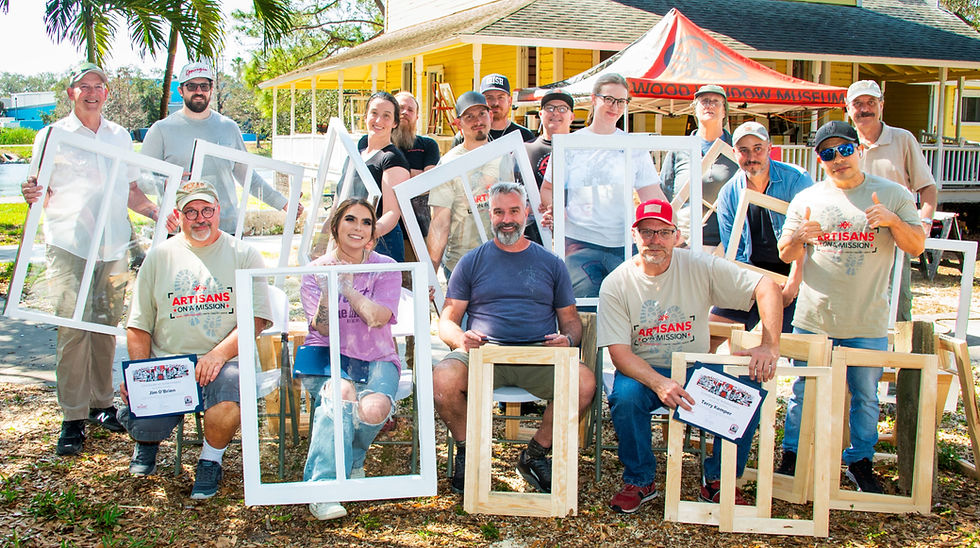
This is how we save our windows.
This is how we save our neighborhoods.
By putting the craft back into the hands of people.
⸻
Join Us in Uvalde — Or Bring It Home

If you feel called to this work, you have options:
• Come yourself.
• Send members of your team.
• Invest in training people who can return and serve your community.
Our workshops aren’t just about learning techniques — they’re about restoring capacity. They equip people to excel, master a meaningful trade, and become servants of their historic house communities.
From the technician.
To the homeowner.
To the neighborhood.
To the nation.
This is how we rebuild from the ground up.
If you’re ready to be part of that, join us in Uvalde — or watch for upcoming workshops near you.
Let’s put Window Craft back where it belongs.


Comments